A Community-Led Archaeology Dig on a Tiny Scottish Isle Has Unearthed a Medieval Monastery of ‘International Importance’
From Smithsonian Magazine:
The settlement, founded by an early Christian saint in the 500s, is “far more than a small island church.” It may have played a larger role in the Christianization of Britain than historians once realized.
Written by Sonja Anderson.
Historians have long known that Lismore, a small isle in the Inner Hebrides of Scotland, was home to a medieval monastery called Lios Mòr. Written records detail its sixth-century founding by St. Mo Luóc, one of the early monks who spread Christianity to northern Britain. But with very little archaeological evidence, apart from a broken granite cross, scholars could not confirm Lios Mòr’s size, style or significance—until now.
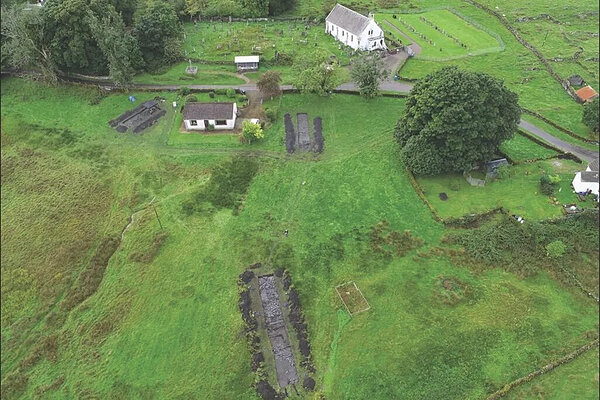
According to an article published in the journal Antiquity last week, a group of local volunteers led by archaeologist Clare Ellis, of the firm Argyll Archaeology, discovered an early medieval cemetery, various structures and “sophisticated craftworking of international importance” during excavations near Lismore’s 13th-century parish church.
“For centuries, Lismore’s early monastery was known mainly from written records and local tradition,” study co-author Gordon Noble, an archaeologist at the University of Aberdeen, says in a statement. “We can now see that it was a thriving center of worship, craftsmanship and learning, whose importance may have rivaled some of the best-known monasteries in early medieval Britain.”
This is an excerpt from a story originally published by Smithsonian Magazine on October 09, 2026. Read the full story.