Alumni Spotlight: Brian T. Kelly (Ph.D. ’94)
The Medieval Institute is pleased to present our Fall 2026 Alumni Spotlight. In this series, we feature the career paths of medieval studies alumni. Look for a new installment each semester, and follow our weekly news features regarding Medieval Institute-supported programming, events, and guest lectures on our news and events feeds.
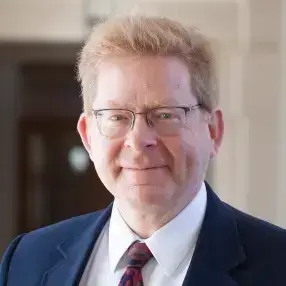
This semester's alumni spotlight features Brian T. Kelly (Ph.D. '94), Tutor at Thomas Aquinas College, where he has also held past roles of Assistant Dean for Student Affairs and then Dean of the College from 2009 to 2017. Professor Kelly completed his Ph.D. in Medieval Studies at Notre Dame under the institute's much-beloved Professor Ralph McInerny, a renowned past director; Prof. Kelly wrote his dissertation on "Aquinas on Gravitational Motion." We asked Prof. Kelly to share about his experience at Notre Dame and the career that followed.
What initially drew you to medieval studies, and how did that initial attraction change or deepen during the course of your graduate studies at the Medieval Institute?
As an undergraduate I fell in love with the mind of St. Thomas Aquinas and his philosophical mentor Aristotle. At the time the Medieval Institute was a very attractive option especially because it provided the opportunity to study with Ralph McInerny, one of North America’s most accomplished Thomistic scholars. The reality that the Medieval Institute was tending in a more interdisciplinary direction at the time under John Van Engen was not a problem for me. I wanted to focus on St. Thomas but was certainly very open to learning about the medieval world in a broader way. He lost me a little bit when he said in his welcoming talk that medieval scholarship was expanding so that now we can finally ask important question like whether or not medieval peasants wore underwear. But I remember fondly many great classes on Neo-Platonic thinkers with Stephen Gersh, on Middle English Mystics with Kent Emery, on medieval Latin with Daniel Sheerin, and on Dante with Ed English. But I think the highlights were several intense courses on St. Thomas with Ralph McInerny and Joseph Bobik. I was also grateful that John Van Engen allowed me to sign up for Alasdair MacIntyre’s first graduate course in the fall of 1990 on Aquinas, Nietzsche, and Sedgewick even though only one of the three was medieval. I loved my time in the Medieval Institute and I am grateful to all who helped enrich my appreciation for the history, literature, and wisdom of the medieval world.
Upon completing your studies, you returned to your alma mater, Thomas Aquinas College, to join the faculty as a Tutor. What were you most eager to bring with you from your time at the Medieval Institute to share with your colleagues and students?
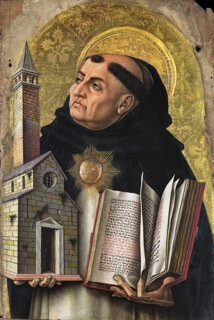
I returned to my alma mater, Thomas Aquinas College, with a renewed sense that the wisdom of St. Thomas Aquinas was ever new and ever relevant. When I arrived to the Medieval Institute as a first-year graduate student in 1988, it was difficult not to notice that the study of St. Thomas Aquinas was frequently treated as an outdated exercise. But over my six years it seemed as though there was a gradual strengthening of the reputation of Thomism. Alasdair MacIntyre came on board and started throwing around his Thomistic-Aristotelian weight. Ralph McInerny’s influence in the Medieval Institute and in the Philosophy Department seemed to blossom. The Catechism of the Catholic Church was published in 1992 with St. Thomas’ fingerprints all over it. And finally, Pope John Paul II issued the great encyclical Veritatis Splendor in 1993 insisting on the crucial validity of the Thomistic analysis of the human act. The influence of St. Thomas was rampant!
When you look back over the course of your career, what aspects or experiences from your time at the MI ended up being the most formative for you?
Of course my time in the classroom was formative. But perhaps the most formative was failing my master’s level oral exam and having to retake it under extreme pressure. Older students told me that the oral exam was merely a formality and “nothing to worry about.” One of my examiners was out of the country and unreachable by telephone so I wrote to him and said that unless I heard back from him I would simply prepare general themes from the two primary text courses I had taken from him. He did not respond but when I saw him in the hallway two days before the exam he said that what I was preparing was fine. But then in the exam itself he asked me about a French article that we hadn’t read but that was mentioned in a footnote in the translator’s preface—which preface we had not been asked to read. And when I drew a blank he refused to move off of the question. In the end I was allowed to retake it five months later with the threat of having to leave if it didn’t go better. But it didn’t kill me, it made me stronger—and humbler. And it taught me that not everyone is your friend, and there is no replacement for hard work and meticulous preparation.
I should also add that I was deeply formed by the sense of community I experienced at Notre Dame. I found great friendships working under Ralph McInerny’s mentorship in the Maritain Center (which was next door to the Medieval Institute in those days) and alongside a great group of my fellow graduate students including giants like John O’Callaghan, Mike Letteney, Tony Andres, Randy Smith, Chris Kaczor, and Steve Jensen. And all under the watchful eye of Alice Osberger, Ralph’s capable, and sometimes imposing, secretary.
I was deeply formed by the sense of community I experienced at Notre Dame. I found great friendships working under Ralph McInerny’s mentorship in the Maritain Center (which was next door to the Medieval Institute in those days) and alongside a great group of my fellow graduate students including giants like John O’Callaghan, Mike Letteney, Tony Andres, Randy Smith, Chris Kaczor, and Steve Jensen. And all under the watchful eye of Alice Osberger, Ralph’s capable, and sometimes imposing, secretary.
I also felt as though I was privileged to see some of the giants of yesteryear in their twilight. I remember the great Canon Astrik Gabriel. He was large of girth but always convinced that there was room for him in the elevator however packed it was when it opened. And Jean Oesterle, who was allowed, by personal dispensation of Fr. Hesburgh, to chainsmoke in her office on the seventh floor despite the rigid prohibition on smoking everywhere else.
I was not untouched by the glorious Notre Dame football culture, which particularly blossomed in the Lou Holz years. My first year, 1988, I was determined not to be distracted by football. I needed to do well in my first semester. I needed to devote myself to my studies. I passed on the opportunity to buy student rate football tickets. But unfortunately (or fortunately), my apartment was just off campus and well within earshot of the stadium. Much as I tried to pore over my books on a Saturday in the fall I would be stirred up by the pounding of the drums and the roar of the crowd and I had to find out what had happened. I felt like St. Augustine’s friend, Alypius, at the gladiator show. I was delighted to fall in line and follow the Irish to victory after victory and an undefeated championship season. It was very bonding with the whole university family.
What proved to be the soundest advice you received from a mentor during your time at the MI?
I am profoundly grateful for two pieces of advice I received at Notre Dame. Daniel Sheerin, a great Latinist and a delightful teacher, told me not to let the perfect be the enemy of the good.
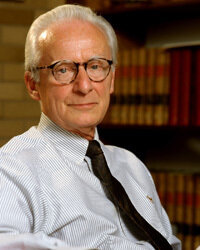
And when I was in the thick of writing my dissertation, my director, Ralph McInerny, kept telling me to “Keep writing.” He didn’t put up roadblocks but cheered me on.
What advice would you give to current graduate students in the MI?
During my time as Ralph McInerny’s teaching assistant I heard him give this advice many times. I thought it was good then and I will offer it now to honor his wisdom. His advice: Be true to the dreams of your youth.