Let's hear it for good news! Celebrating our recent achievements.
We recently asked you to share your good news from the summer with us, and we are delighted to share it with our whole community. Congratulations to all on their achievements!
Did you know ...- You can submit your good news throughout the year via our website.
- We have a faculty bookshelf on our website and would be delighted for you to let us know when you have a new book out—just submit your information on the bookshelf site.

Professor Emeritus of Classics and MI Faculty Fellow W. Martin Bloomer has published a new book, Evoking the Dead: Roman Books of Memory (Johns Hopkins University Press, 2026). During the turbulent transition from Republic to Empire, Romans became intensely preoccupied with their own past. In Evoking the Dead, W. Martin Bloomer examines how memory was constructed, organized, and put to work in this moment of political uncertainty—and how literature became one of its most powerful instruments.

Michael P. Grace Professor of Medieval Studies and past Robert M. Conway Director of the Medieval Institute, Thomas E. Burman, has a new co-edited book out, A Connecting Polemic in the Medieval Mediterranean: The Correspondence of Leo III and ʿUmar II (Chicago: Institute for the Study of Ancient Cultures, 2026). This book offers the first comprehensive edition and translation of all surviving versions—Latin, Armenian, Arabic, and Aljamiado—of the polemical correspondence attributed to the Byzantine emperor Leo III and the Umayyad caliph ʿUmar II.

Our Associate Director and Term Assistant Teaching Professor Megan J. Hall was invited to record an episode of the Talking Tudors podcast, hosted by Natalie Grueninger. The podcast can be listened to here (or on your favorite platform) or watched on YouTube. She joined Talking Tudors to explore women's literacy and education in medieval England, tracing how reading and writing shifted from church-centered training to household and aristocratic learning between 1100–1300 and beyond. She discusses educational settings and curricula for girls and boys, the role of saints and literary models, and how modern research reshapes our assumptions about women's intellectual contributions.
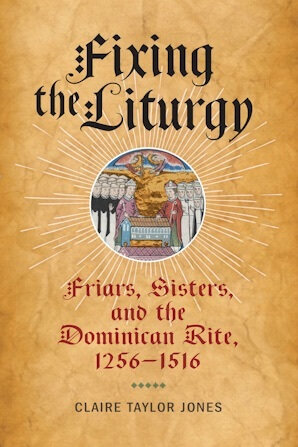
Professor of German Studies and our new Robert M. Conway Director of the Medieval Institute, CJ Jones, received honorable mention in the 2026 Biennial Publication prizes of the New Chaucer Society for Best Monograph on a Topic dealing with Late-Medieval Literature and not author’s first monograph for their book Fixing the Liturgy: Friars, Sisters, and the Dominican Rite, 1256–1516 (University of Pennsylvania Press 2024). Jones’s monograph analyzes, through the study of the Dominican order, how liturgical changes reveal the ways medieval practitioners, including women, exercised forms of agency through ceremonies planned for their communities to experience and enact.

Mary Lee Duda Emeritus Professor of Literature and MI Faculty Fellow Tim William Machan has published a new book Languages, Legends, and American Dreams: The Emergence of English in Multilingual America, 1750–1850 (Oxford University Press, 2026). Languages, Legends, and American Dreams concerns the development of an American language narrative in the formative years 1750–1850, from the United States' emergence out of disparate colonies, to its expansion across the North American continent, to the approach of a Civil War that threatened its very existence.

Managing Director of the Global Catholic Research Initiative and MI Research Affiliate Anna Katharina Rudolph has published a new book, Rewriting History and the Myth of the French Nation: The Hagiography of Radegund of Poitiers from Medieval to Modernity (Amsterdam Univeristy Press 2025, Routledge 2026). This multidisciplinary analysis of the cult of Radegund of Poitiers, from the sixth century to the twenty-first, illuminates the roles saints play at the intersection of gender and politics. No other medieval saint was so politically charged or had such an astonishing range of constructed personae. The many “Radegunds” encountered in this study—virgin, wife, mother, royalist, republican, colonizer—can all be interpreted as responses to contemporary political events, shifting spiritual trends, and changing attitudes towards women’s role in society or the Church.

This year's Stavros Niarchos Foundation (SNF) Byzantine Studies Postdoctoral Fellow, Dimitra Sikalidou, undertook an extensive fieldwork trip to Laconia, Greece, in preparation for her research on the religious landscape of the fortified settlement of Geraki. During her visit, she examined the material evidence at Geraki, while also visiting a number of other medieval/early modern sites throughout Laconia. An especially meaningful aspect of the fieldwork was the opportunity to speak with local residents and people connected to the sites. Their knowledge, memories, and personal connections to the monuments offered perspectives particularly valuable for a project interested not only in the transformation of monuments themselves, but also in the ways religious spaces have been experienced, used, and remembered by the communities around them.

Associate Professor of History and MI Faculty Fellow Deborah Tor held a summer Franco Global Microresidency Fellowship at the Faculty of Asian and Middle Eastern Studies at the University of Oxford. She shared that apart from being wined, dined, and flooded with tea by colleagues at New College, All Souls, Brasenose, Pembroke, Lady Margaret Hall, St. John’s, and Wadham Colleges, she presented one of the chapters of her current monograph, participated in a conference on paganism in Arabia in Early Islamic Times, and planned future events with Oxford colleagues. The rest of the summer was spent completing the penultimate chapter of her book (which clocked in at 61 pages), reviewing two article manuscripts for Studia Islamica and Journal of ʿAbbasid Studies, and continuing to act as Medieval editor of the journal Iranian Studies.
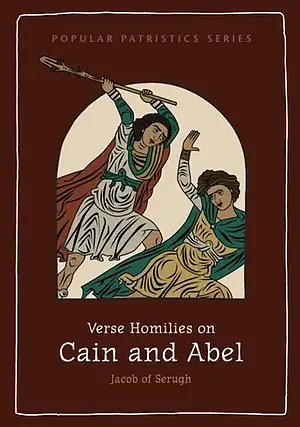
Associate Professor of Theology and last year's Robert M. Conway Intermin Director of the Medieval Institute, Jeff Wickes, has a new book out, A Translation of Jacob of Serugh's Verse Homilies on Cain and Abel (SVS Press, 2026). Jacob of Serugh, one of the foremost poets and theologians of the West Syrian tradition, composed hundreds of memre, or homilies in verse, on a multitude of topics. This translation from the Syriac original presents four of these verse homilies that are dedicated to the biblical story found in Genesis 4 of Cain’s murder of his brother Abel and his subsequent punishment by God.